
The Complete Beginner's Guide to Running
💡 Key Summary
✅ Running is the most accessible workout there is — you can start with no special gear or venue
✅ For the first 8 weeks, build up with a "1 min run + 2 min walk" interval to protect your knees and joints
✅ Flat track routes like the Han River, Olympic Park, or Dongtan Lake Park are ideal for beginner runners
If the thought "maybe I'll give running a try" has crossed your mind, you're already halfway there. This article is for anyone starting to run for the first time, or who started before but stopped because of knee pain. From motivation to choosing running shoes, proper form, an 8-week training plan, and recommended routes by city — it's all here in one place. Getting safely through your first week is the shortcut to becoming a lifelong runner.
Running Isn't Hard
Running is the most accessible workout there is — you can start without special gear or a particular place. But knowing just a few things from the start lets you run longer, more enjoyably, and injury-free.
5 Good Changes That Come From Running
- Better cardio fitness: Within the first 2 weeks, you'll be less out of breath climbing stairs
- Better sleep quality: Light aerobic exercise promotes deep sleep
- Stress relief: The endorphins released during exercise ease feelings of low mood
- Less body fat: Minute for minute, it burns twice the calories of walking. For the full diet effect, see the Running Diet Guide
- Higher self-esteem: The small win of "I ran today, too" builds up day by day
3 Things to Know at the Start
- Don't overdo it: Running too fast or too far in your first week will wreck your knees
- Rest is training too: You don't need to run every day. Three times a week is plenty
- Fun is the answer: A workout you sustain on willpower alone is over within a month
1. Choosing Running Shoes
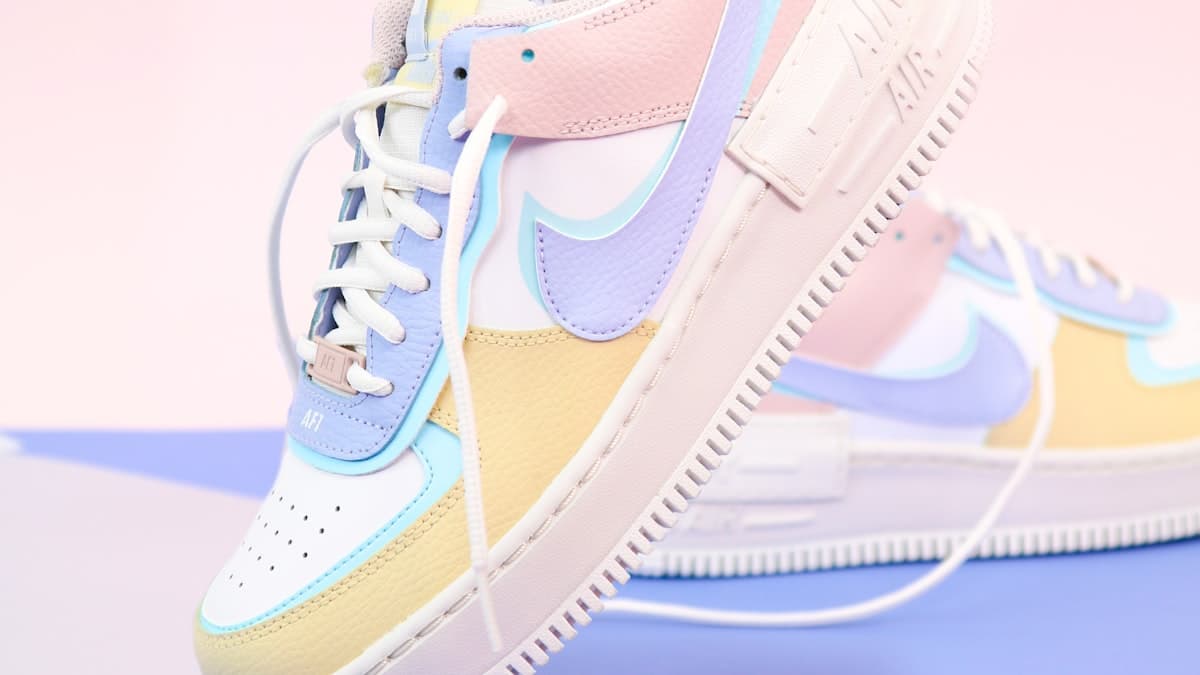
The most important piece of gear in running is your shoes. Regular sneakers absorb 50–60% of impact, but running shoes absorb 70–85%. In running, where each step lands with 2.5–3 times your body weight, your shoes are what decide your knee health.
- Cushioning: As a beginner, choose running shoes with plenty of cushioning
- Sizing: A size 0.5–1 cm larger than your usual shoe is about right
- Foot shape: Getting a foot-shape measurement (gait analysis) at a store helps you find the running shoe that fits you perfectly
- Price: For beginners, the 150,000–200,000 KRW range is the safest bet
💡 Tip
It's best to replace running shoes after roughly 500–800 km of use. Check your cumulative distance in the Wittiz app!
2. Proper Running Form
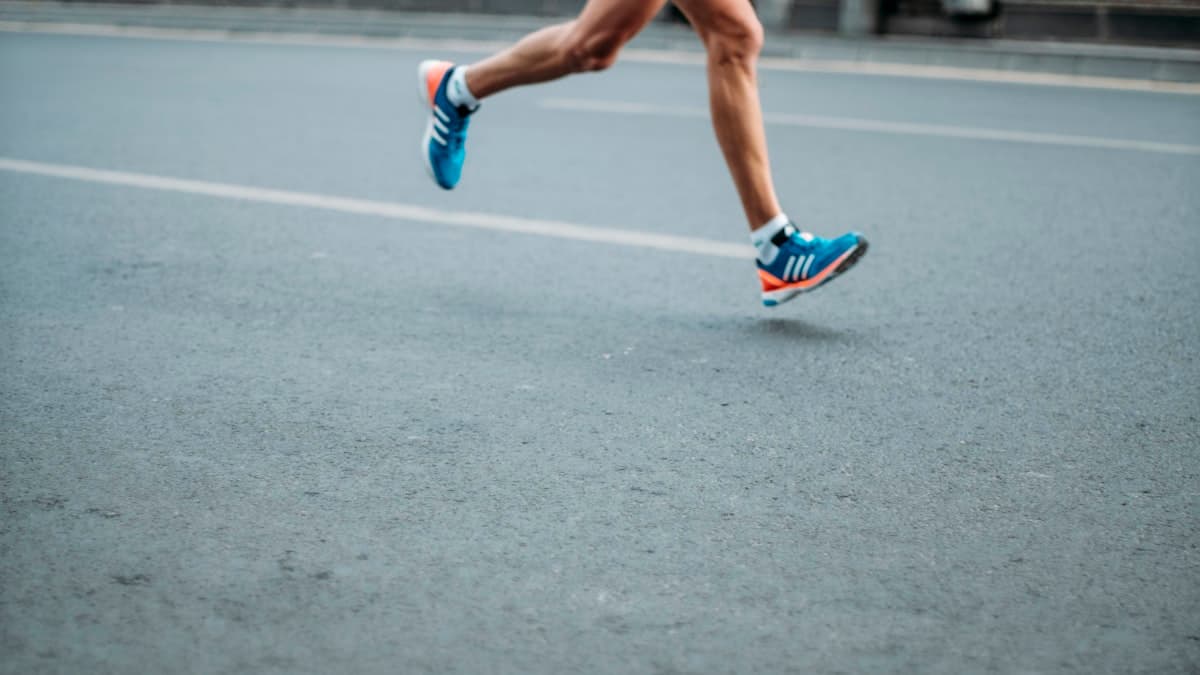
Good form prevents injury and lets you run efficiently.
Upper Body
- Keep your gaze on a point 15–20 m ahead
- Let your shoulders drop comfortably and release the tension
- Bend your arms at 90 degrees and swing them naturally
Lower Body
- Your foot should land directly beneath your body (don't reach too far forward)
- Keep your stride natural — not too long
- A cadence (steps per minute) of around 170–180 is ideal
3 Common Form Mistakes
- Looking down at your feet: Tension builds in your neck and shoulders, making breathing uncomfortable
- Clenching your fists: Tense hands stiffen you all the way up to the shoulders. Imagine lightly holding a paper cup in each hand
- Pounding down on your heels: It's a sign your stride is too long. Shorten it so your foot lands beneath your body
Bad form leads to knee and sole injuries. For warning signs and how to respond, also check the Injury Prevention Guide.
3. The 8-Week Beginner Training Plan
At first, it's important to build stamina by alternating between walking and running.
| Week | Run | Walk | Reps | Total time |
|---|---|---|---|---|
| Weeks 1–2 | 1 min | 2 min | 8× | 24 min |
| Weeks 3–4 | 2 min | 1 min | 8× | 24 min |
| Weeks 5–6 | 3 min | 1 min | 6× | 24 min |
| Weeks 7–8 | 5 min | 1 min | 4× | 24 min |
📌 Note
Don't push too hard! If you're too out of breath, it's perfectly fine to slow down or extend your walking time.
A Day-by-Day Guide for Your First Week
The hardest part is the first week. Here's a concrete day-by-day guide.
| Day | Recommended activity | Time |
|---|---|---|
| Monday | Start Week 1 of the 8-week plan (1 min run + 2 min walk × 8) | 30 min |
| Tuesday | Rest or light stretching | 10 min |
| Wednesday | Repeat Week 1 of the 8-week plan | 30 min |
| Thursday | Rest or brisk walking | 20 min |
| Friday | Repeat Week 1 of the 8-week plan | 30 min |
| Saturday | Complete rest | - |
| Sunday | A light walk (30–40 min, while chatting) | 30 min |
The key is that "rest days are part of training," too. Running every day isn't better — 3 sessions a week + 4 recovery days is the most effective. After 8 weeks you'll be able to run for 5 minutes nonstop, and from there the 30-Day Running Challenge makes climbing to 30 minutes of continuous running feel easy.
4. Stretching Before and After Running
Before Running (Dynamic Stretching)
- Leg swings (front-back, side-to-side), 10 each: Hold a wall or post, stand on one leg, and swing the other leg forward and back. Feel the movement coming from the hip joint; start small and gradually widen the range.
- High knees, 20 reps: In place, alternately lift your knees to navel height. Let your arms swing naturally to the opposite side.
- Butt kicks, 20 reps: In place, alternately kick your heels up toward your glutes. Bounce lightly, as if your knee is rising toward your navel.
After Running (Static Stretching)
- Calf stretch, 30 seconds each: Place both hands on a wall and step one foot far back. Keep that heel on the ground and slightly bend the front knee, and you'll feel the calf lengthen.
- Quadriceps stretch, 30 seconds each: Stand on one leg, grab the top of that same-side foot with your hand, and pull the heel toward your glutes. The key is to keep both knees together so they don't splay apart.
- Hamstring stretch, 30 seconds each: Place one foot half a step ahead with the toes up, then push your hips back and bend your upper body forward. Keep your back straight so your lower back doesn't round.
5. Recommended Routes by City for Beginner Runners
Having a flat route near home is half the battle for sticking with exercise. Here are good routes for beginner runners in Korea's major cities.
| City | Recommended route | Distance | Features |
|---|---|---|---|
| Seoul | Han River Park (Banpo·Yeouido·Ttukseom) | Unlimited | Flat, plenty of restrooms and convenience stores, safe |
| Seoul | Olympic Park outer track | About 4 km | Soft urethane, easy on the knees |
| Seoul | Seoul Forest trail | About 2–3 km | Lots of trees, cool in summer |
| Incheon | Songdo Central Park | About 5 km | Flat, great night views |
| Gyeonggi Dongtan | Dongtan Lake Park | About 3 km | Flat track, safe for families |
| Busan | Gwangalli Beach | About 3 km | Choice of sand or asphalt, sunrise |
| Daegu | Suseongmot trail | About 2 km | Flat, good night lighting |
| Gwangju | May 18th Memorial Park track | About 400 m × N | Urethane track, easy to measure distance |
3 Conditions for a Good Beginner Route
- Flatness: Avoid uphill at first. The strain on your knees and calves more than doubles
- Loop course: Figure-eight or circular courses make distance easy to measure, and you can cut out partway through when you're not feeling great
- People and lighting: For safety, choose places with people around, and at night, places with lighting. Safety tips especially for women runners are covered in the Women's Running Diet Guide
💡 Tip
For your first month, we recommend running the same route repeatedly. Once "from here to there is this far" is in your body, you'll develop a sense of pace quickly. Distance is easy to check with the GPS feature in the Wittiz app.
6. The Secret to Running Consistently
The hardest thing about running is consistency. Here are a few tips to share:
- Start with small goals: "3 times a week, 20 minutes" is more realistic than "30 minutes every day"
- Keep records: Logging your runs makes the sense of achievement grow
- Run together: Joining a running crew or running with a friend keeps you motivated
- Add a fun factor: Wouldn't it be even better if you could enjoy running like a game?
"Consistency starts with fun. Start running the fun way with Wittiz!"
Try it for yourself in the Wittiz app!
Frequently Asked Questions (FAQ)
How many days until I see results from running?
You'll usually feel changes within the first 2 weeks. You'll be less winded climbing stairs, and your sleep quality improves. Changes in weight and body shape start to show from weeks 4–6. That said, muscle soreness can be intense in the first week — it's a natural part of adapting. If pain lasts more than a week, cut your intensity in half.
Should I run on rainy or cold days, too?
Light rain is fine, but avoid heavy rain and thunderstorms. On cold days (below -5°C), don't push it — swap in an indoor treadmill or jump rope instead. Summer heat waves (a heat index of 33°C or higher) are dangerous in the same way. For a detailed seasonal guide, see the Summer Running Diet Guide.
My side hurts while running. Why?
This is the symptom commonly called a "side stitch." It often appears when you run right after eating, or when your breathing is shallow and fast. There are three fixes: ① slow down and breathe deeply, ② press the painful spot with your hand while breathing slowly, ③ run at least 1 hour after eating. If it keeps happening for more than a week, there could be another cause, so see a doctor.
Do I need to buy separate workout clothes for my first run?
At first, a cotton T-shirt and shorts are enough. But once you start running 5 km or more, functional clothing (CoolMax or Dri-FIT type) makes a big difference. Cotton soaks up sweat and gets heavy, and the friction chafes your skin. Get your running shoes properly sorted first, and after a month of running, buying the clothes that suit you is the sensible move.
Once I can run 30 minutes nonstop, what's the next goal?
Once the 8-week plan and the 30-Day Challenge get you to 30 minutes of continuous running, there are two paths. If you want to go farther, set your target distance with the 10K 8-Week Training Plan. If your goal is weight loss, focus on intensity management with the Zone 2 Diet Guide.
Wrapping Up
The essentials of getting into running come down to three things: an 8-week interval plan you don't overdo + running shoes that fit your feet + securing a flat route near home. Add a regular schedule of 3 times a week plus recovery time, and 8 weeks from now you'll have become someone who can run for 5 minutes nonstop.
Put on your shoes today and run just one easy minute at the park in front of your house. That one minute is the starting line of a lifelong runner. Moongti will be right there with you!
This article was written by the Wittiz team and includes app-related content. If you have an underlying condition such as a knee or heart issue, please be sure to consult a medical professional before starting to exercise.